
Corydoras Catfish | Caring for These Peaceful Aquarium Gems
When I first set up my planted community tank right in my living room, the bottom felt a bit empty. That changed the day I introduced Corydoras Catfish. They didn’t just add life to the lower levels of my aquarium; they became my ultimate, tireless cleanup crew. Watching them snuffle through the sand together is still one of my favorite parts of the hobby.
With over 171 recognized species, Corydoras are small, peaceful, armored bottom-dwellers originating from South America. But despite their reputation as hardy beginner fish, I’ve seen countless new aquarists make fatal mistakes with their tank setups. Let’s dive into everything you actually need to know—beyond the forum myths—to keep your Corydoras thriving.
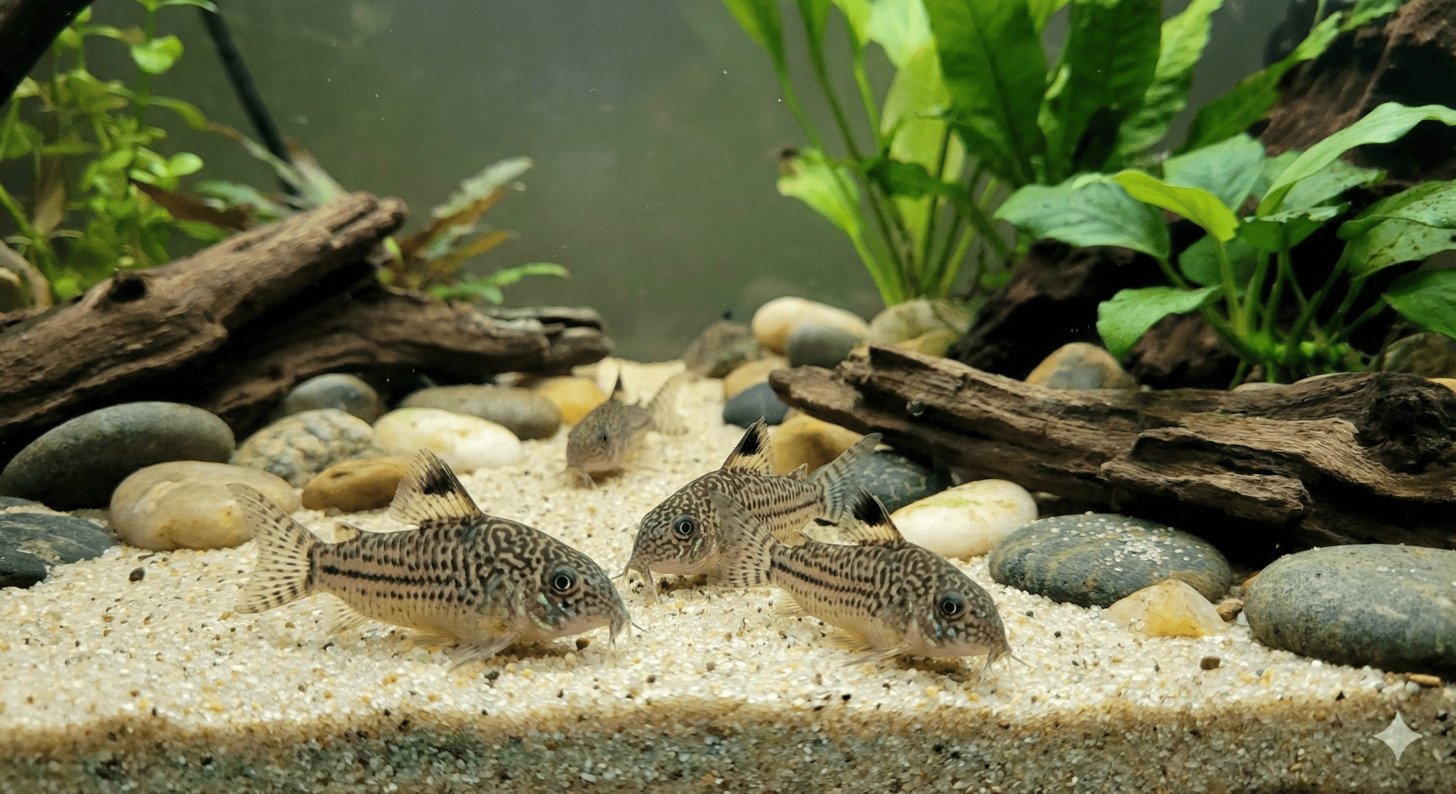
Physical Characteristics: The Armored Cleaners
Unlike traditional fish with normal scales, Corydoras catfish have tough, bone-like armored plates called scutes that protect them from predators. They also feature sensitive whisker-like appendages called barbels around their mouths. These barbels are their primary tool for detecting buried food in the substrate.
Setting Up the Ideal Corydoras Tank
Creating the perfect environment isn’t just about water; it’s about the physical layout of the bottom of the tank.
The Substrate Rule (Crucial!)
In my experience, the substrate is where most beginners fail with Corys. Because they spend 100% of their time dragging their faces across the bottom to forage, the wrong substrate can be lethal.
💡 MKO Pro Tip: The Sharp Gravel Trap
Never house Corydoras on sharp, jagged gravel or crushed coral. Sharp edges will physically cut and erode their sensitive barbels. Once their barbels are damaged, they cannot find food, become highly susceptible to bacterial infections, and will slowly starve. Always use fine, soft sand. I swapped to smooth-play sand in my community tank, and their natural sifting behavior completely transformed!
🚨 Is Your Substrate Safe?
Not sure if your gravel is too sharp for Corydoras? Don’t risk their barbels. Drop a picture of your tank’s bottom in our Telegram community, and I’ll personally tell you if it’s safe.
Filtration and Water Flow
Corydoras prefer pristine water with a gentle to moderate flow. High levels of nitrates or ammonia will burn their barbels and bellies. Regular 25% weekly water changes are non-negotiable to keep the substrate level clean.
Feeding: They Are Not “Just Cleaners”
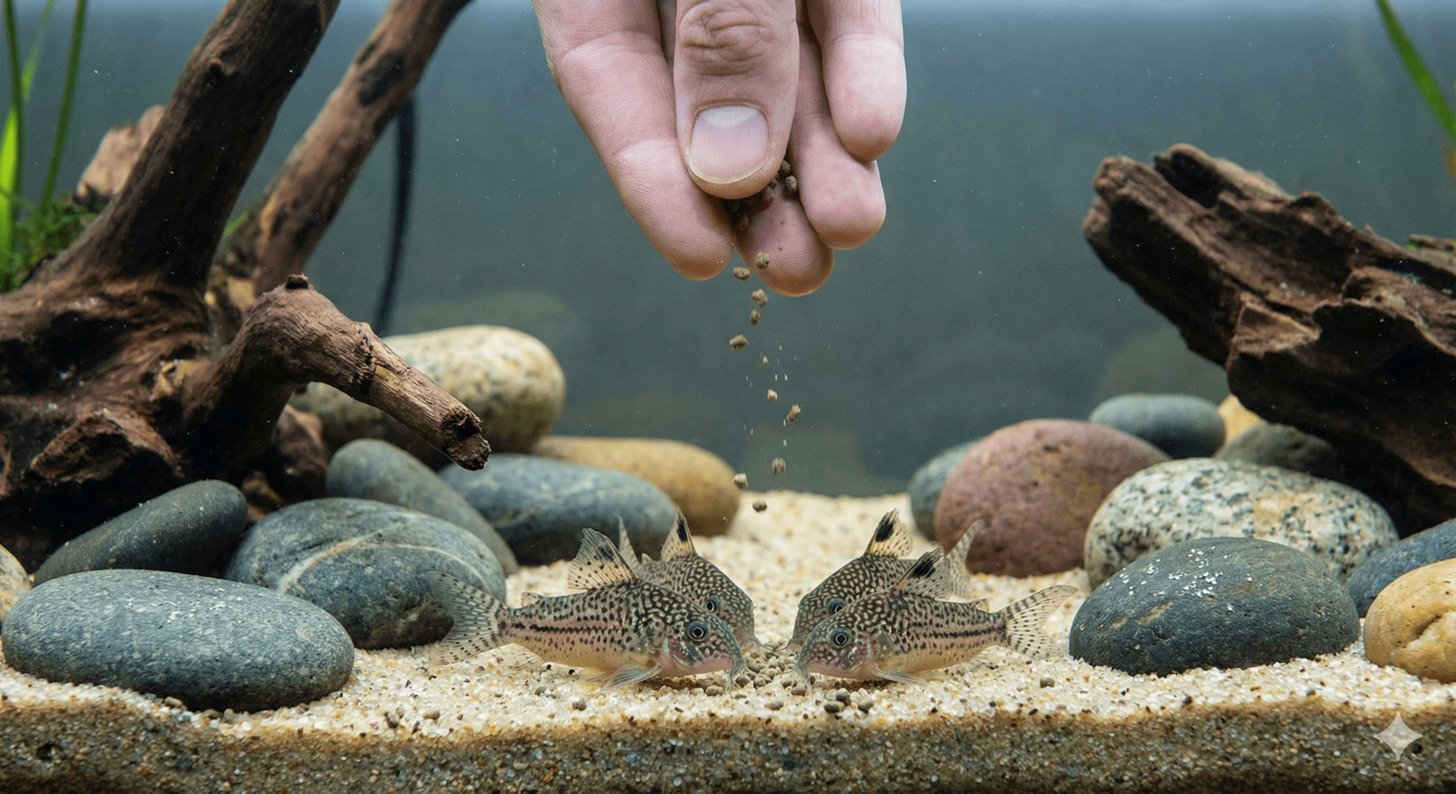
One of the saddest myths in the hobby is that Corydoras can survive solely on fish poop or leftover flakes that fall to the bottom. They are omnivores that require their own dedicated meals. I feed my pair high-quality sinking wafers (like Hikari) and frozen bloodworms a few times a week. Make sure they actually get to the food before faster mid-level fish steal it!
Best Tank Mates for Corydoras
Because they are peaceful and lack defensive weapons (besides their rigid spines), they must be housed with non-aggressive fish. In my community tank, they perfectly co-exist with a Betta fish, Neon Tetras, and Guppies because they occupy entirely different levels of the water column.
- Perfect Mates: Harlequin Rasboras, Tetras, Honey Gouramis, and Betta fish.
- Avoid at all costs: Cichlids (like Oscars), Tiger Barbs, and large aggressive bottom feeders that will compete for territory.
📹 See Them in Action
Video Credit: Excellent species showcase by Steenfott Aquatics on YouTube. (External Resource)
📚 Scientific Sources & References
- Seriously Fish: Species Profile – Corydoras aeneus (Bronze Corydoras) and Corydoras panda. Habitat, diet, and water parameters guidelines.
- FishBase: Taxonomy and biological data for the genus Corydoras (Lacepède, 1803), including labyrinth organ adaptations for atmospheric respiration.
- MKO Aquatics Practical Testing: Real-world substrate safety observations and community tank behavioral analysis based on hands-on experiences from our own home aquarium setup.
* Note: Medical and compatibility advice provided in this guide combines peer-reviewed aquatic biology with hands-on, everyday hobbyist experience.


