

Serpae Tetra Care Guide 2026: How to Stop the Fin-Nipping
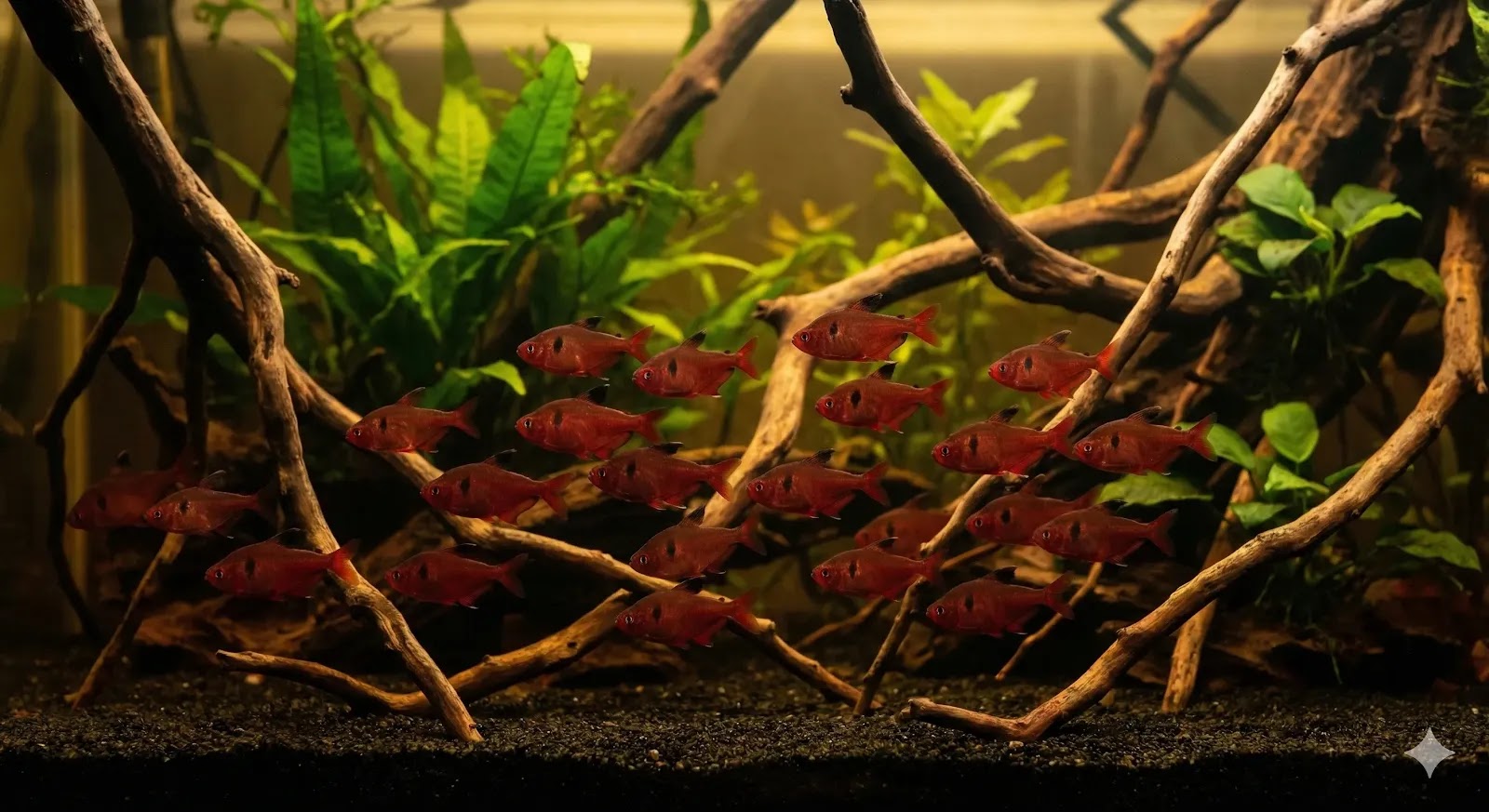
We have all been there. You walk into your local fish store and immediately fall in love with a striking, jewel-toned red fish darting through the display tank. You bring a small group of Serpae Tetras home, and within 48 hours, the fins of your peaceful community fish are shredded. Sound familiar?
The Serpae Tetra (Hyphessobrycon eques), frequently sold as the Red Minor Tetra, carries a notorious reputation as an aquatic bully. Having kept and bred these fish across multiple setups over the years, I can confidently tell you that this aggressive label is largely unfair. Their fin-nipping is almost never driven by sheer malice; rather, it is a direct biological response to improper tank environments and inadequate school sizes.
In this comprehensive care guide, we will decode the exact science behind their behavior. By taking a systematic, species-specific approach to their environment, you can entirely eliminate their aggression, allowing you to enjoy their stunning ruby coloration in a peaceful, thriving community aquarium.
The Scientific Why: Decoding the Fin-Nipping Instinct
To stop the aggression, you must first understand its biological root. In the densely vegetated, slow-moving blackwater tributaries of the Amazon River, Serpae Tetras exist as schooling micro-predators. Unlike the ultra-peaceful Neon or Ember Tetra, Serpaes establish a strict, complex social hierarchy (a pecking order) to determine who secures the best food and mating privileges.
They establish this rank by playfully chasing, sparring, and occasionally nipping at each other. Within a massive wild school, this is entirely normal and harmless behavior. The crisis in the home aquarium occurs when a beginner aquarist buys only 3, 4, or 5 of these fish. In such small numbers, the school cannot stabilize. The weakest fish at the bottom of the pecking order gets relentlessly bullied to the point of exhaustion and death.
Highly stressed, defensive, and lacking internal targets, this small group will redirect their innate nipping behavior outward—targeting any slow-moving fish with flowing fins in your tank. The definitive cure for their aggression is overwhelming numbers. When kept in a proper school of 10 or more, their aggression is safely dispersed across the entire group. They become so preoccupied with their own internal social politics that they completely ignore the rest of your community fish.
Appearance and Sexual Dimorphism
A healthy, unstressed Serpae Tetra is a breathtaking display piece. They feature a tall, laterally compressed, diamond-shaped body bathed in a rich, translucent ruby-red hue. Just behind their gills, they sport a prominent, comma-shaped black spot. Their dorsal fin is sharply edged in deep black and tipped with striking white, while the anal fin flares with a brilliant red margin.
Telling males from females is relatively straightforward once they reach maturity. Males are noticeably slimmer, more streamlined, and boast a much deeper, intense red coloration. Females, particularly when gravid (carrying eggs), have rounder, plumper bellies, and their red coloration is slightly more muted or paler in comparison to the males.
Hardware & Habitat: Building the Perfect Setup
To keep their bright colors glowing and their stress levels effectively at zero, your aquarium must mimic their natural Amazonian habitat as closely as possible.
1. Tank Size and Dimensions
A standard 20-gallon “Long” tank is the absolute minimum requirement. Because they are incredibly active, horizontal middle-column swimmers, the footprint (length) of the tank is far more important than its vertical height. A 20-gallon long provides the necessary runway for a school of 10 to establish distinct territories, spar naturally, and burn off excess energy without crashing into tank mates.
2. Water Quality and Filtration
Serpae Tetras are highly sensitive to ammonia and nitrite spikes. Never introduce them to an uncycled tank. Ensure your biological filtration is robust—an external canister filter or a large, well-seeded sponge filter works perfectly, provided the current isn’t overpowering.
We strongly recommend using the API Freshwater Master Test Kit weekly to verify that Ammonia and Nitrite are at strict 0 ppm, and Nitrates remain below 20 ppm. Always treat your tap water with a high-quality detoxifier like Seachem Prime during your routine 25% weekly water changes.
3. Aquascaping: Plants and Lighting
The secret weapon against tetra aggression is “broken lines of sight.” A heavily planted tank allows targeted fish to easily break visual contact and escape a chase. Utilize hardy background plants like Amazon Swords and Vallisneria, paired with Cryptocorynes in the foreground.
For aesthetics and fish comfort, utilize a dark substrate and incorporate natural driftwood (like Mopani or Spider Wood). The wood releases tannins, creating a slightly acidic “blackwater” tint. This tinted water diffuses bright LED lights, which dramatically reduces the fish’s stress and makes their red scales visually pop against the dark environment.
Nutrition Protocol
Serpae Tetras are omnivores with a voracious appetite. In the wild, they feed heavily on small insects and crustaceans. Feeding them a high-quality, varied diet prevents nutritional deficiencies that can lead to color loss, immune system failure, and heightened aggression.
Avoid cheap, loose bulk foods filled with fish-meal fillers. Instead, anchor their diet with premium micro-pellets like Fluval Bug Bites (which mimic their natural insect-based diet) or Hikari Micro Pellets. To trigger breeding and enhance maximum coloration, supplement their diet twice a week with protein-rich treats like frozen bloodworms, daphnia, or live brine shrimp.
Ideal Tank Mates: Building a Peaceful Community
Even in a large school of 10+, you must be strategic about who shares their water. You must pair them with fish that inhabit different vertical zones of the tank, are fast enough to escape a chase, or are robust enough to command respect.
Never house Serpae Tetras with fancy Guppies, slow-moving Angelfish, Gouramis, or Betta fish (especially long-finned varieties like Halfmoons). Their flowing fins act like a red flag to a bull, making them irresistible targets. This relentless nipping leads to severe stress, secondary bacterial infections like Fin Rot, and ultimately, death.
✅ Excellent Community Tank Mates Include:
- Corydoras Catfish (e.g., Pygmy, Bronze, or Sterbai Corys): These are peaceful, armored bottom-dwellers. They stay entirely out of the tetras’ mid-water territory, avoiding conflict entirely.
- Zebra Danios & Harlequin Rasboras: These species are incredibly fast and active, easily out-swimming any curious tetra.
- Bristlenose Plecos: Heavily armored, nocturnal, and completely unbothered by small nipping fish.
- Black Skirt Tetras or Cardinal Tetras: If you have a large enough tank (30+ gallons), keeping other robust, fast-schooling tetras creates a beautifully active, balanced ecosystem.
Breeding Serpae Tetras
Serpae Tetras are egg-scatterers. They drop their adhesive eggs in dense vegetation and offer zero parental care. In fact, if left in the breeding tank, the parents will quickly turn around and eat their own eggs.
To breed them successfully, set up a dedicated 10-gallon breeding tank. Use very dim lighting, soft water (pH around 6.0), and cover the bottom with Java Moss or a synthetic spawning mop. Condition a pair (or a small ratio of males to females) for a week on live foods. Introduce them to the breeding tank in the evening; spawning usually occurs at dawn. You must immediately remove the adult fish once you spot the tiny, translucent eggs. The fry will hatch in a few days and require microscopic food like infusoria before graduating to freshly hatched baby brine shrimp.
References & Sources
- Hyphessobrycon eques Species Profile. Seriously Fish.
- The Fin-Nipping Truth About Serpae Tetras. Tropical Fish Hobbyist (TFH) Magazine.
- Care and Breeding of the Serpae Tetra. Practical Fishkeeping.

MKO Aquatics Team
We are a team of passionate aquarists dedicated to modern, ethical fish keeping. With years of hands-on experience, our mission is to help beginners build thriving, balanced freshwater ecosystems without the guesswork.


